

Key Takeaways
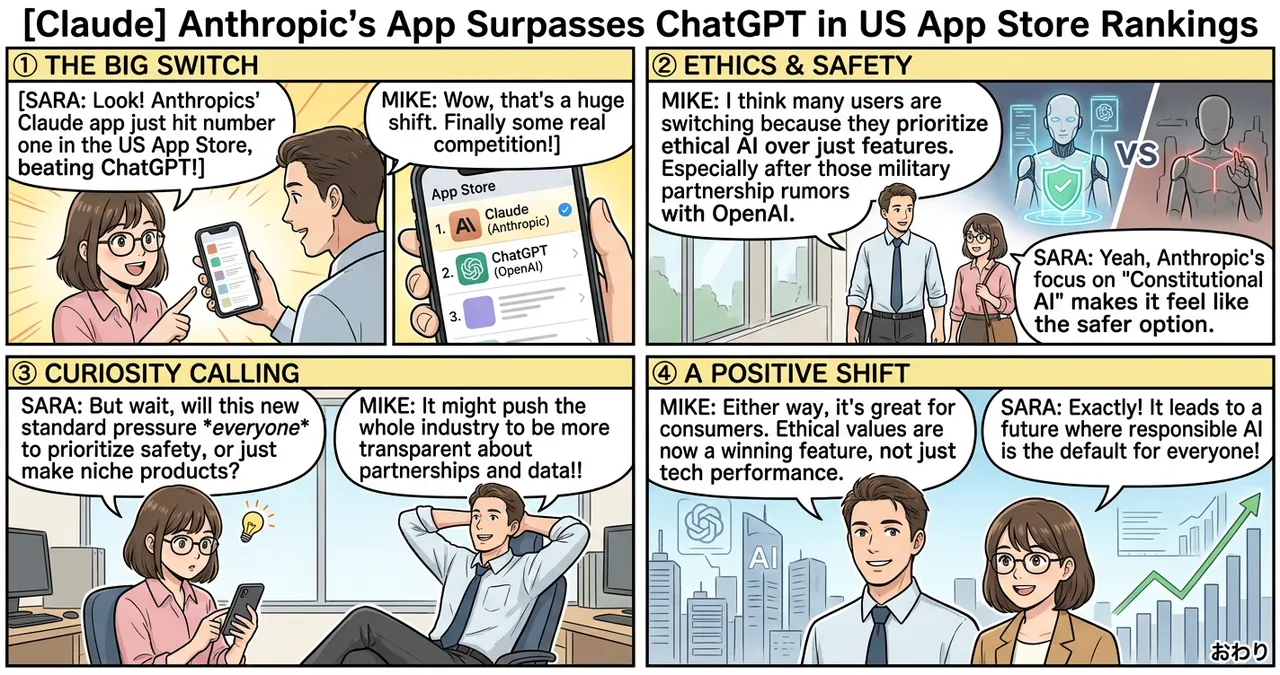
- Anthropic’s Claude reached the #1 spot in the US App Store’s free app rankings, successfully overtaking ChatGPT.
- The surge in downloads is largely attributed to growing user dissatisfaction with OpenAI’s military partnerships, leading to a migration toward safety-focused alternatives.
- This shift highlights a market demand for ethically aligned AI, suggesting that corporate values are becoming as important as technical performance.
Detailed Breakdown
Claude’s Ascent to the Top
Anthropic’s mobile application, Claude, has achieved a significant milestone by securing the top position in the Apple App Store for the United States. While ChatGPT has historically dominated the AI category since its mobile debut, Claude’s sudden rise signals a change in consumer behavior. This momentum follows a period of consistent updates to the Claude platform, including enhanced processing speeds and more sophisticated reasoning capabilities.
The Catalyst: Ethical Concerns and Military Ties
Reports indicate that the catalyst for this shift is not purely technical. OpenAI, the creator of ChatGPT, has recently faced scrutiny regarding its collaborations with defense and military organizations. This move appears to have alienated a segment of the user base that prioritizes non-militarized technological development. As users look for alternatives, Anthropic—a company founded by former OpenAI executives with a specific focus on “AI safety”—has emerged as the primary beneficiary.
Anthropic’s Market Position
Anthropic has consistently branded itself as a “safety-first” organization. By implementing a framework known as Constitutional AI, the company aims to ensure its models adhere to a specific set of ethical principles. This positioning has resonated with users who are increasingly wary of how large language models are utilized in sensitive sectors. The recent ranking shift suggests that Anthropic’s long-term strategy of prioritizing safety is now yielding tangible results in terms of user acquisition and market share.
Why Is This Significant?
The displacement of ChatGPT by Claude is significant because it proves that the AI market is not a “winner-takes-all” scenario based solely on early entry. User perception and corporate ethics are now active variables in the competition between major AI labs.
| Feature | OpenAI (ChatGPT) | Anthropic (Claude) |
|---|---|---|
| Primary Focus | General utility and rapid deployment | Safety, ethics, and nuance |
| User Interface | Conversational and multi-modal | Clean design with “Artifacts” for productivity |
| Recent Controversy | Military and defense partnerships | Minimal; perceived as the ethical alternative |
| Key Technical Strength | Broad ecosystem and integration | Large context window and sophisticated writing |
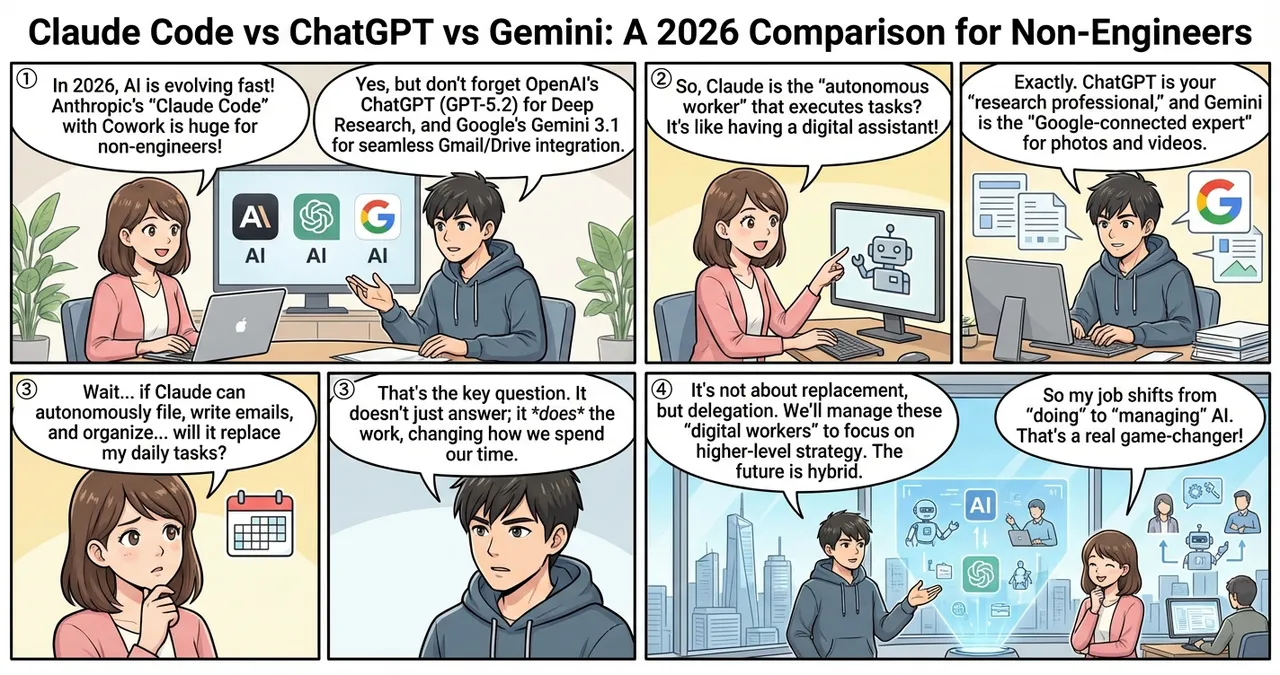
This transition is further explored in our detailed analysis of Claude Code vs ChatGPT vs Gemini: A 2026 Comparison for Non-Engineers, which examines how these models perform in practical, everyday scenarios.
Impact on the Tech Industry
For engineers and tech companies, this development signals that ethical frameworks are no longer just “nice-to-have” features but are essential for maintaining user trust. If users are willing to switch platforms based on corporate partnerships, companies may need to be more transparent about their collaborations and data usage policies.
Furthermore, this competition encourages a “race to the top” regarding safety features. As Anthropic gains ground, other developers may feel pressured to adopt similar safety-centric architectures to remain competitive in the consumer market. This could lead to a broader industry shift where AI alignment becomes a standardized metric for success.
Points to Consider
While Claude’s rise is impressive, there are several factors to monitor objectively:
- Sustainability of Rankings: App Store rankings are often volatile. It remains to be seen if Claude can maintain this position once the initial wave of migration stabilizes.
- Funding and Independence: As Anthropic grows, it faces its own set of pressures from investors like Amazon and Google, which could eventually impact its safety-first stance.
- Feature Parity: While Claude excels in writing and safety, ChatGPT still maintains a lead in certain multi-modal features and third-party integrations, which may draw some users back.
Try It Yourself
If you are interested in exploring why users are making the switch, you can take the following steps:
- Download the App: Install Claude from the iOS App Store or Google Play Store.
- Test the Context Window: Upload a long document or a complex dataset to see how Claude handles large amounts of information compared to other tools.
- Explore Artifacts: Use the “Artifacts” feature to create code snippets, documents, or websites in real-time within the chat interface.
- Compare Outputs: Run the same prompt through both ChatGPT and Claude to observe differences in tone, safety guardrails, and reasoning.
Summary
Anthropic’s Claude surpassing ChatGPT in the App Store marks a pivotal moment in the AI industry where consumer ethics have directly influenced market rankings. This shift suggests that users are actively seeking alternatives that align with their personal values regarding safety and military involvement. As the competition intensifies, the industry’s focus may broaden from raw computational power to the transparent and ethical application of AI technologies.
Why It Matters
This news confirms that the AI landscape is maturing, and users are becoming more discerning about the companies they support. For the industry, it proves that a commitment to safety and ethics can serve as a powerful competitive advantage, potentially reshaping how future AI models are developed and marketed.
Primary Sources
Glossary
- Constitutional AI: A method developed by Anthropic to train AI models using a set of rules or “principles” to guide their behavior without human intervention.
- LLM (Large Language Model): An AI system trained on vast amounts of text data to understand, generate, and manipulate human language.
- App Store Ranking: A metric used by Apple to determine the popularity of an app based on downloads, velocity, and user engagement within a specific region.
![[Ethical AI] Google and OpenAI Staff Back Anthropic’s Stance Against Military AI](https://4koma-news.com/images/posts/en/77-2026-03-01-google-openai-military-letter-blog.webp)
![[Weekly AI Industry & Trends] Top 5 News to Watch (3/1 - 3/8)](https://4koma-news.com/images/posts/en/89-weekly-ai-news-other-2026-03-08-blog.webp)
![[Weekly AI Model Updates] Top 5 News to Watch (3/1 - 3/8)](https://4koma-news.com/images/posts/en/88-weekly-ai-news-model-2026-03-08-blog.webp)

